Wednesday, January 31, 2018

Pine Creek Fundraiser


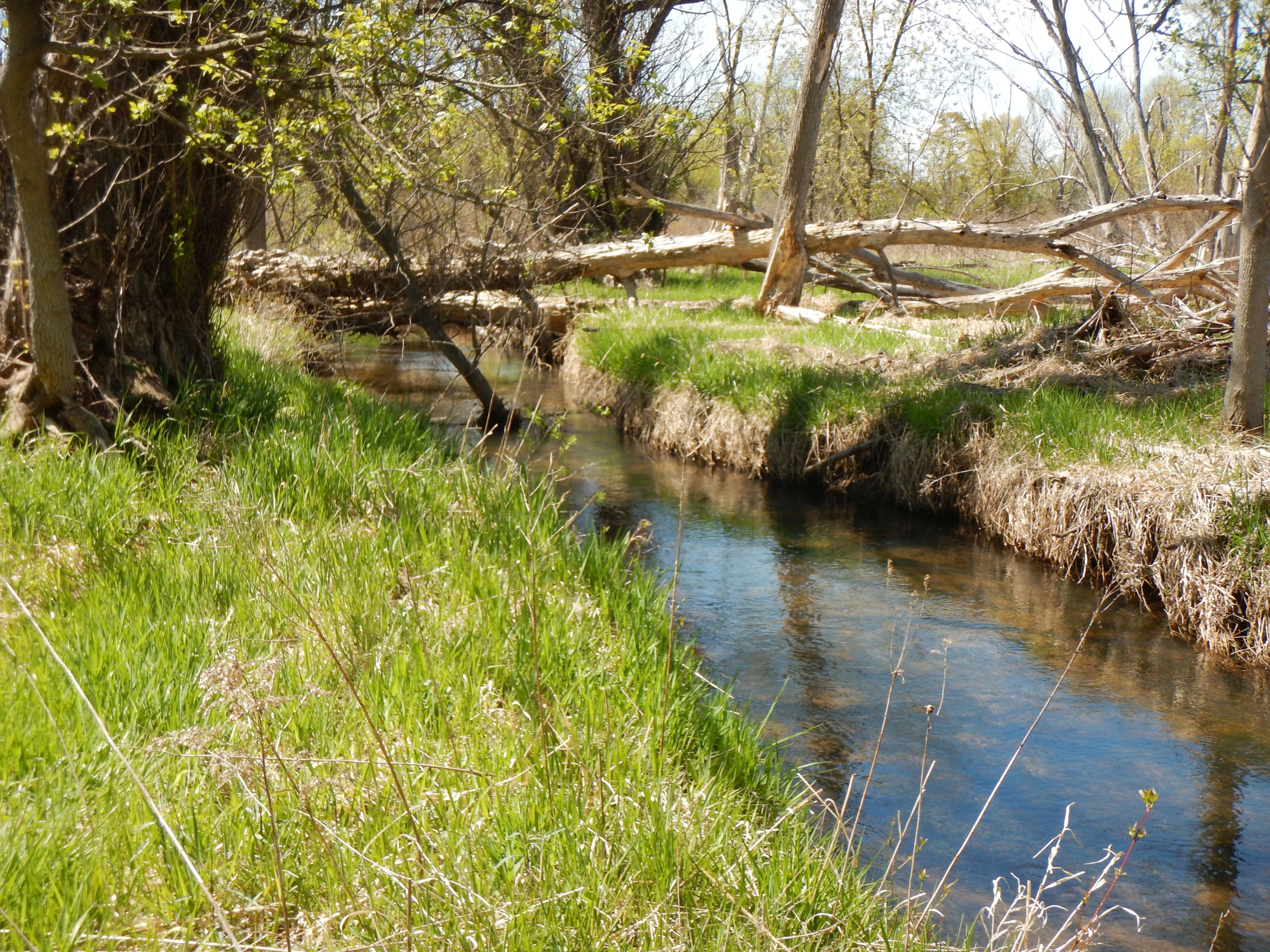
Class III and IV whitewater in Oklahoma?? You bet. Flagpole Mountain near Clayton, Oklahoma is a unique plateau unlike any other area of the Ouachita Mountains. It offers ten (or more) whitewater streams for paddlers to explore, ranging from Class II to IV+, and is a short drive from Oklahoma City, Tulsa, Little Rock, Dallas, and Shreveport, Louisiana.

Let that sink in for a second. These runs are some of the most accessible whitewater segments for middle America.  Paddleable segments include Buck Creek , Pine Creek , Clear Creek , Maxwell Creek , Little Cedar Creek, East Fork of Little Cedar Creek, Crumb Creek , and Wildcat Creek, although we suspect many more lie untouched on top of Flagpole Mountain. Of these, Pine and Buck are known to hold water for multiple days after a good rain.

The kicker is that we needed a gauge on which to base the water levels. Previously, there was no true way of knowing if any of these creeks were running without  calculating rain totals and driving hours based on a hunch. In 2016, thanks to donations from numerous sources, including the Arkansas Canoe Club and OKC Kayak, that dream became a reality. The Pine Creek gauge is now ideally situated on beautiful Pine Creek, a sporty Class III run . The gauge provides dependable pool-height readings and can be accessed here. Once we understand the minimum level, we will be linking the gauge to American Whitewater and the Ozark Creek Information Summary.  Our best guess at a minium floatable level currently is at least 7 feet on the gauge.

Funding will be the major issue moving forward. Per USGS, the maintenance fees total $4,000 annually. Your funds will be put directly towards helping us keep this treasured gauge. While there are some plans in the mix to secure long-term funding, 2018 and 2019 will be pivotal years for this project because it will allow explorers to calibrate the ideal levels and educate other paddlers about the area. We need your help now!

Any paddlers living in Texas, Louisiana, Oklahoma, and Arkansas stand to benefit from this gauge, as do any whitewater boaters travelling along the I-30, I-40, and I-35 corridors. The Flagpole Mountain creeks often run when nothing is going in Arkansas. There are state parks within a thirty minute drive of the gauge itself.  This is very real opportunity to advance whitewater paddling in Oklahoma and we ask that you be a part of it.

Here's the breakdown:
1. We need to raise $2, 273 by April 1 (of 2018) to keep the gauge alive through 2019.
2. After that, we will need to  raise $2,600 to support the gauge through March of 2020.

Both of these totals include GoFundMe's charges.  All donated funds are overseen by a collection of Arkansas Canoe Club-affiliated paddlers, so you can rest assured that your donation will go straight towards funding this gauge (ain't no funny business going on here). Anything you can donate will go a long way to helping us open up Flagpole Mountain to the whitewater community!

To learn more, visit www.gofundme.com/pinecreek!

Tuesday, January 16, 2018

The First Trashy Tuesday of 2018 Is Complete


We Turned Out For The First Trashy Tuesday of 2018

The first "Trashy Tuesday" of the new year is officially complete!  The ACA puts a priority on cleanup and environmental conservation.  The Trashy Tuesday tradition is a monthly river cleanup organized by the Willamette River Keepers and supported by the ACA and various municipalities throughout the Willamette River Valley. The cleanups take place along the full length of the Willamette River and several of its tributaries from Portland to Eugene Oregon. In Eugene the cleanups are scheduled for the 2nd Tuesday of each month and focus on a different section of river depending on the amount of trash. These cleanups are incredibly important because not only do they help keep the local communities safer, looking nicer and healthier; they also affect every community down river and even world wide as this trash has the potential to reach the ocean and end up anywhere on the globe, on a beach, in our fish or in the ocean’s depths. So find your local river cleanup opportunity and do your part to help.  Oregonians near the Willamette Valley who wish to get involved should visit williamette-riverkeeper.org.


Wednesday, November 22, 2017

USA Women's National Kayak Polo Team Brings Home Gold!


USA Kayak Polo – The USA Women’s National Team brings home gold!


The USA Women’s National Team represented USA Kayak Polo at the 2017 Pan American Canoe Polo Championships in Buenos Aires, Argentina, over November 16th-19th. The biennial Pan American Canoe Polo competition is the continental cup championship for Canoe Polo, and includes federations from both North and South America.

Canoe/kayak polo is a team sport requiring strength, coordination, agility and knowledge of tactics. The game is played 5 on 5, with each team permitted up to 8 people, and with two 10-minute halves. Each player paddles individually in a highly maneuverable kayak and is allowed to pass, dribble or throw the ball, using their hands or a paddle.

During the competition, the US Women’s team finished 1st in a round robin after a win against Canada 5:2, a draw against Argentina 5:5, and a win against French Guiana 9:1. Playing against the well-prepared Argentinian team was the most challenging game for the US; Supported by numerous spectators, family and friends, the young Argentinian team played with their hearts and fought hard. On the last day of the competition, the US Women’s team played well and won their semi-final convincingly. The US Women were hoping to have a rematch against Argentina in the final, but Canada secured their spot with a 1:0 semi-final win over Argentina. Under the guidance of their experienced coach, whose previous role was coach for the U21 German Men’s National Team, the US Women changed their tactics to a more aggressive “press” style of play and were able to dominate the final game against Canada with a score of 5:0.

By winning the Pan American Canoe Polo Championships, the USA Women’s National Team qualified to participate in the 2018 ICF Canoe Polo World Championships, to be held in Welland, Canada.

Coach: Holger Dietrich (Berlin, Germany)
#1: Sveta Platanova (San Francisco, CA) - Captain
#2: Olly Gotel (New York, NY)
#4: Heather Fenske (San Diego, CA)
#5: Emily Pozzi (Austin, TX)
#7: Stephanie Schnorr (Austin, TX)
#11: Lydia Thein (Boston, MA)


Friday, September 22, 2017

INVITATION to a Workshop on U.S. Forest Service Permitting


Come learn about recent U.S. Forest Service efforts to simplify the process for obtaining Forest Service (USFS) outfitter-guide permits! 

The USFS and the Coalition for Outdoor Access (COA), a diverse group of organizations dedicated to improving access to federal lands, will be co-hosting a public engagement workshop on the agency’s June 2016 guidance on the outfitter-guide permitting system. This guidance promises to provide new opportunities for facilitated access to Forest Service lands. 
The workshop will be held on Tuesday, on October, 31, 2017 from 8am-12pm at the Hotel Roanoke in Roanoke, VA. RSVP HERE. This workshop is part of the pre-conference sessions being held in conjunction with the annual conference for the Association of Outdoor Recreation and Education. It is free and open to anyone who is interested. 
During the workshop, representatives of COA and USFS will provide attendees with a briefing on the new guidance and engage attendees in a dialog on how the various aspects might relate to their program or activity. Workshop leaders will also share some of the success and challenges that have occurred over the past eighteen months of implementation. 
If you have an interest in providing guided recreation opportunities on the National Forests, this workshop will provide valuable insight on how to navigate the permitting process. 
If you would like to attend, click on the RSVP link above. Space is limited, so register now.

Thursday, September 21, 2017

2017 Sanctioned Event of the Year Award Winner


The ACA is proud to present the Sanctioned Event of the Year Award for 2017 to the Penn Cup Slalom Series!  This award is presented to the top ACA sanctioned event as nominated by the paddling public!

The Penn Cup is a fall series of races designed to introduce paddlers to the sport of slalom racing. Races are held on Sundays, with Saturdays reserved for course construction, practice, and clinics. Clinics are taught by experienced racers -- including former series champions and some of the best paddlers in the state and in the US -- and serve to introduce beginners to the sport, and to help more experienced racers advance from the basics of running the gates to discovering and paddling the most efficient lines. Awards are presented at each race, and overall series awards (earned on a point system) are presented after the final race. There are many classes available at each race for open and decked boats, solo and tandem boats, racing boats, recreational boats, canoes, kayaks, stand-up paddleboards, juniors, cadets, and masters. The emphasis is on fun and learning, and so the races in this series make an excellent introduction to the sport. Courses are designed to be challenging to beginning-intermediate paddlers. Penn Cup Series is dedicated to building interest in slalom racing at the grassroots level. Some of our past participants have gone on to national, international, and Olympic teams in the sport. This event series has been ongoing for 40+ years, and has a strong youth slalom development program. This is the perfect example of local clubs and instructors working together to form a multi-location competition series that also places strong value on education and training.

Tuesday, August 29, 2017

Guest Water Blog By Carol Newman Cronin and Susan Shingledecker


From The Paddler's Point Of View

With stand-up paddleboarding getting more popular by the day, how can paddlers and boaters safely navigate around each other? Let's learn from both sides. First up, our paddleboarder, Carol Newman Cronin.
Stand-up paddleboards (SUPs) can be like fiberglass gnats: unpredictable and hard to spot. Beginners, especially, need to paddle defensively, which means avoiding congested areas until you can reliably control your own board. It takes time to develop the skills and strength needed to maintain a stable speed and direction. Until you do, the best place to learn is somewhere away from boating traffic. Once you're confident in your board-handling skills, the key to defensive paddling is to take responsibility for getting out of the other guy's way. Here are some specific tips:
  •  Anticipate interactions. You'll see other boats coming before they see you. Don't wait for them to alter course. With enough lead time, you can get out of someone's way, even if you have to paddle perpendicular to your planned route to do so.
  •  Make your intentions clear. SUPs can seem erratic in direction. Hold a steady course and, if necessary, use hand signals: Point to your chest first, then hold your arm or paddle out in the direction you intend to go. (Repeat these gestures a few times.)
  •  Avoid the channel. Most harbors have a clearly marked route for larger boats to pass through the anchorage. Paddleboarders, please don't use this. If you have to navigate in the channel, hug the starboard side.
  •  Cross traffic efficiently. Take the shortest route possible across a traffic lane (usually perpendicular to traffic). It's often hard for other boaters to figure out where you're heading, so do your best to maintain a steady pace and direction.

Can You See Me Now?

SUPs are hard to see from any distance. Freeboard is the biggest factor in boat visibility, and even boards with really thick rails have only around 6 inches of it. You may feel quite tall, and your board might be bright red when you look down at it, but from a quarter mile away, your profile will blend in with the background — even against an open horizon. Here are two ways you can increase the chances of being seen:
  •  Wear bright colors, especially on your torso and head. Sometimes the only difference between a too-close encounter and safely passing port to port is the quick eye-catching "What's that red thing?" question from the boat coming at you and the second look its operator might take as a result.
  •  Be flashy. On sunny days, the most visible part of a distant SUP is the reflection off a shiny paddle blade or handle, the same way the windshield of a boat too far away to see can flash as bright as a strobe. Consciously "flashing" your paddle at an oncoming boat will help draw attention to your location.

Safety, Visibility, And Rules

SUPs are defined by U.S. Coast Guard rules as "vessels" outside a surf zone, so paddlers are required to carry or wear a life jacket and a signaling device (whistle in daylight, flashlight after dark). Other smart ideas:
  •  Wear a leash at all times. If there's any wind, your board will blow downwind faster than you can swim.
  •  Add an "if found" sticker on your board (if available in your area). Otherwise, write your contact info on the board — not just to help find it if you lose it, but to track you down if your board is discovered floating without you.
  •  Consider painting one side of your blade international orangeso it can be used as an overhead sign of distress if needed.

Maneuverability — A Mixed Blessing

SUPs can turn, go straight, or come to a full stop very quickly, and they're almost never constrained by their draft. But this directional flexibility can tempt us to go places we shouldn't, like into marinas and empty slips. Doing so makes our next move quite hard to predict for a boat operator. By using our maneuverability to stay out of the way, rather than to explore places where larger vessels are trying to maneuver themselves, we'll minimize the chances of surprising or annoying their operators. More tips:
  •  Stay away from casting areas. Like other boaters, shoreline fishermen may not see you until it's too late. I've had several anglers cast right across my bow, only to realize after the hook was in the water that I had to stop in my tracks to avoid running into their lines. If you can, paddle far enough away from the shoreline to avoid casting areas. Otherwise, call out to fishermen who look ready to cast right across your bow. Once they see you, most will wait until you're safely beyond the fishing area — or drop the tips of their rods so you can paddle over their lines.
  •  Beware of blind spots. When paddling between moored boats, keep a sharp lookout for traffic. You and your board may be completely hidden from view.
  •  When in doubt, use your whistle. Paddlers are required to carry a sound-signaling device. If another boat doesn't see you, blow your whistle. It's amazing how far a sharp piercing sound like that will carry.
Carol Newman Cronin paddleboards every day around busy Newport and Jamestown, Rhode Island. She's a writer, editor, and Olympic sailor.

From The Boater's Point Of View

Especially in areas with lots of SUP rentals, users may not be well versed in navigation rules. In order to share busy harbors, let's look at the sport from Susan Shingledecker's boating perspective.
On any given day, boaters can be faced with a minefield of commercial traffic, moored boats, kids sailing Optis, and flotillas of kayakers and stand-up paddleboarders. SUPs are considered vessels, so operators must follow the same navigation rules as other boats. For many, however, this may be their first time on the water, so for boaters, collision avoidance should supercede all other considerations. Here are a few tips for boaters to help us all share the water:
  •  Move slowly in congested waters. Allow time for others to see you and vice versa.
  •  Pay close attention when entering and exiting slips and fairways. Novice paddleboarders often like to stay close to docks for added security, making them difficult to see.
  •  Assign a spotter. It's smart, especially when lots of paddlers are around, to assign a designated lookout stationed in an area of the boat that offers maximum visibility.
  •  Expect the unexpected. Paddlers falling off their boards can happen easily.
  •  Watch your wake. Being aware of our wake is always important, but even more so with SUPs around. Even a modest wake can send a paddler into the drink. Reduce speed whenever operating in congested waterways, especially near paddlers and SUPs.
  •  Use clear signals to indicate your intentions. When making sudden changes of direction or crossing the path of paddlers, point to your chest first, then hold your arm out in the direction you intend to go. (Repeat a few times.)
  •  Assess the skills of paddlers near you. Paddlers making strong strokes and good progress likely are more stable and predictable. Paddlers unsteady on their feet, sitting on boards, or making little progress may be inexperienced. Steer clear!
  •  Look for light at night. While SUPs, kayaks, and other paddlecraft are required to carry appropriate lights for operating after dark, the assortment of lighting methods used varies from suction-mounted navigation lights to headlamps to glow sticks. Be suspect of any lights you see on the water at night.
  •  Help others in distress. Especially in cooler temperatures, keep an eye out for paddlers and any other boaters who could be in distress. Many paddlers don't carry VHF radios or other signaling devices and have limited means of seeking assistance. 
Susan Shingledecker, vice president of the nonprofit BoatUS Foundation, started boating on the Great Lakes and now enjoys exploring Chesapeake Bay with her family on their 28-foot sailboat.
— Published: August/September 2017

Monday, August 21, 2017


ACA hires J. Michael Forman as new Director of Conservation, Stewardship & Public Policy

FREDERICKSBURG, Virginia (Aug. 16, 2017) – J. Michael “Mike” Foreman, a well-known conservationist and natural resources leader in Virginia and throughout the Chesapeake Bay watershed, joined the American Canoe Association Aug. 1, 2017, as director of Conservation, Stewardship & Public Policy. In this role, he will lead all aspects of ACA’s grassroots efforts to promote appropriate access to clean water on America’s waterways, including the nation’s coastal areas. Foreman will provide leadership on federal, state and local policy considerations to advance the mission of ACA. He will also coordinate a wide range of water-based clean-ups throughout the country.  


“We are so pleased to have Mike’s leadership and skill set as we continue to build our policy and community stewardship efforts,” said ACA Executive Director Wade Blackwood. “Mike will help engage our hard-working state director leaders and paddling clubs to increase ACA’s impact on policy and stewardship issues at all levels.”


Foreman brings 36 years of work experience including leadership, facilitation, strategic planning, group process and mediation services. He has worked in the university, corporate and public sectors since 1987, recently retiring from Virginia state government with 30 years of service.


Throughout his career, Foreman has worked in the natural resources field, from agricultural researcher at North Carolina State University and corporate forester work in Louisiana and Mississippi, to work as a forester, program manager and director in Virginia government. He was instrumental in bringing several major programs to Virginia government, including the Conservation Reserve Enhancement Program, the Forest Legacy Program, and the Riparian Forest Buffer Initiative effort. He has worked within the Chesapeake Bay Program leadership for Virginia since 1992, holding major positions and chairmanships during that time including major input on both the year 2000 and 2014 Chesapeake Bay watershed-wide agreements.


Honing his leadership skills, Foreman has conducted hundreds of group process events, facilitation, and leadership trainings throughout his career. As a part of the Virginia Natural Resources Leadership Institute faculty for the last 17 years, he teaches “leadership” portion of the curriculum.

He lives with his wife of 39 years, Deborrah, near Charlottesville, Virginia. They have three grown children and eight grandchildren.

Thursday, August 3, 2017

Marine17 | Asia-Pacific Boating Safety Conference


ACA Chief Operating Officer Chris Stec was asked by Marine17, the largest Asia-Pacific Boating Safety Conference, to present on U.S. paddlesports participation statistics, fatality statistics, as well as regulatory and education initiatives pertaining to Stand Up Paddleboarding.

Building on the success of Marine13 and Marine15, Marine17 attracted over 500 attendees and more than 70 exhibitors from across the Asia-Pacific region. This unique 3 day event brought together the marine sector leaders from state and federal governments and industry to discuss the key sectoral issues across the themes of boating business, marinas, boating safety and light commercial marine.

To view some of the paddlesports related statistical information from the presentation, please visit: www.americancanoe.org/Statistics

The ACA is proud that the tireless volunteer work of our Safety, Education & Instruction Council(SEIC) and all of it's Discipline Committees is recognized worldwide as a leader in paddlesports safety and education.  We also thank the Marine17 organizing committee for providing the ACA an opportunity to share our information in this region of the world.

Marine17 took place in Sydney, Australia.

For more info, please visit: www.marine17.com

Saturday, July 15, 2017

7 Health Benefits Of Kayaking

This ACA Water Blog features guest-blogger Alex Stevenson from the River Whisperer. You can read more of his posts at kayakcritic.net!

Kayaking is a fun activity that you can do with the entire family. You can also get a lot of benefits from kayaking frequently. For some people, it is a way of relaxation. They feel like they are less stressed out the moment they go out there on the waters to kayak.

Aside from relaxation, you will also have a physical activity that makes you lose weight gradually, but constantly. This is perfect for those who have weight issues. You don’t have to hit the gym just to lose weight. Instead, you can have a more fun alternative which is kayaking.

It is also good for the heart. It is a form of a cardiovascular exercise that increases heartbeat and regulates the flow of the blood throughout the body. Once you have seen the changes in your body, you will start feeling more positive about yourself.

You will feel good since you have started to lose weight and be in better shape. You will also find people who share the same passion. You can be with the same group of kayak lovers and meet on a regular basis.

These are just some of the reasons why you should try out kayaking. If you want to know more about kayaking and the list of benefits that you will get from the activity, just check the infographic below. Once you have started doing this activity, you will find yourself out in the waters. You will truly enjoy the activity.

Monday, May 29, 2017

ACA Outreach In China

ACA Outreach In China


Historical Overview:

Seven years ago, through the work of Dave Burden, the ACA's International Paddlesport Ambassador, the first ACA sanctioned club in China was opened on Fuyang Island. (insert the two attached pictures with red carpet and blue background with Coastlines logo). Several of the Coastlines Kayak Club staff received the ACA Level 2: Essentials of Kayak Touring Assessment. Coastlines co-founder David Chen continues to support the ACA's outreach in China.

Over the past several years, multiple ACA Instructors, Instructor Trainers and Instructor Trainer Educators have had the opportunity to teach a wide variety of Assessment courses and Instructor Certification Workshops (ICWs) in China. (insert kayak photo with ACA banner here)

• Dave Burden
• Juan Paulo Ceron
• Mark Carlson
• Dave Kessman
• Ben Lawry
• Ivan Bartha
• John Browning
• Larry Gioia
• John MacDonald
• Christopher Stec

From Level 1: Intro to SUP to Level 3: Coastal Kayaking to Level 4: Whitewater Kayaking to Adaptive Paddling Workshops, there are now multiple ACA certified Instructors across China.  In addition, over 100 ACA assessments have been awarded over the past few years. (insert SUP photo with ACA banner here)

Partnership:


On May 19, 2017, the ACA entered into a partnership with Zhejiang University. (use their logo and the photos where we are on stage signing the agreement)

After a series of meetings, a signing ceremony took place at the International Paddlesports Summit in Hangzhou in conjunction with the 120th anniversary of the University.


Zhejiang University is a national university in China.  Founded in 1897, Zhejiang University is one of China's oldest, most selective and most prestigious institutions of higher education.  It is a member of the C9 League, the Yangtze Delta Universities Alliance and the Association of Pacific Rim Universities.

Excerpt from the Strategic Partnership Agreement

In order to further the spread and promotion of paddlesports, and to advance the exchange and development of paddlesports between China and the USA, both parties held mutual and friendly consultation. By utilizing Zhejiang University’s hundred-year old educational influence, and American Canoe Association’s expertise in paddlesports, on the basis of the principles of “resource sharing”, “complementary advantages”, “emphasis on practical results”, “win-win cooperation”, both Parties have agreed to establish a stable and sustainable long-term partnership, and reached the following strategic partnership mutual understandings:


• Establish strategic partnership with the aim to keep it for the long term.

• Launch educational and instructional cooperation, ACA will assist Zhejiang University in establishing paddlesports curricula, the ACA will give its authorization to Zhejiang University to carry out ACA's existing paddlesports educational and instructional programs and establish an ACA accredited education and instruction headquarters on the Universities premises.

• Both Parties will provide each other with favorable conditions and treatment, forge a new developmental advantage, and work together to promote paddlesports in China’s schools.

We would like to thank ACA Instructor and teacher at Zhejiang University, Ge Wu for his continued assistance throughout this process. In addition, we have also been working with former Chinese National Team member and Sprint World Champion Ms. Shu Yaping from the University on this outreach project.


Collegiate Exchange Program:


The ACA is very excited to be able to provide an invitation to U.S. Colleges and Universities with a paddlesport program to conduct an exchange program with students and/or faculty with Zhejiang University's paddlesport program.

This is a unique opportunity to not only share our respective ideas on paddlesports, but also to enhance the cultural experience between our two countries.

If your College or University is interested in a paddlesports exchange program, please contact ACA Chief Operating Officer Christopher Stec for additional details.


Club Outreach:


The ACA is also commited to supporting the numerous paddling clubs that are arising throughout China

From offering Instructor Certification Workshops and Assessment Courses for clubs to special benefits to be found on the ACA's soon to be launched Chinese website, we realize the important role that paddling clubs are playing in growing various aspects of paddlesports throughout ChinaWe would like to thank the team at Zhouji Kayak Club as well as all the other paddling clubs that have already invested time and energy in enhancing the quality of their programs by parricipating in ACA instructional programs.

Next Steps:


Over the next few months the ACA will be setting up a Chinese website and payment platforms on AliPay and WeChat. 

We will continue to increase the translation (our Instructor Manual is currently in Mandarin) of relevant ACA documents and course criteria.

In addition we are considering potential staffing options based in China.

Special Thanks:


The ACA would also like to thank Dave Burden and Ivan Bartha for the significant amount of time, energy, and guidance that they have provided in regards to the ACA's growth in China.

For more infotmation, please visit: www.americancanoe.org/China

Saturday, May 27, 2017

Boardman River Clean Sweep with L.L. Bean


Boardman River Clean Sweep
ACA  - LL Bean 2017 Grant Report

1st Annual Mother’s Day Weekend 
Kids Creek / Grand Traverse Commons 
May 13, 2017

Background:


In 2012, a dam failed while being dismantled and there was a huge flood on the Boardman River.  After that the Boardman River Clean Sweep had to remove 90 docks, decks and other large debris that had been washed into the river.  The most difficult part of that project was finding the pieces that we had photographed and marked with a GPS.  We needed a combined GPS/camera.

Report:


This year we decided to clean up Kids Creek, the last and largest tributary of the Boardman River, which flows through a 100 year old historic stand of Norway Spruce at the restored Traverse City State Psychiatric Hospital that was established in 1881 and closed in 1989. 

We found Kids Creek to be littered with the usual trash and a homeless campsite but when we inspected the surrounding woods, we found a horrible mess. Many homeless people of Traverse City live in these woods and their small amounts of trash and litter have built up over the years to an amazing level.  As far as we know, neither these woods nor the creek have been cleaned up in recent memory.

The woods are a maze of foot paths and trails and I was lost as soon as I walked into them.  We photographed and GPS marked the trash along the creek and in the woods but we had a hard time finding it again when we went back.  It was very confusing.

We used the ACA grant money to buy a waterproof GPS NIKON camera and, with the assistance of a member of the homeless community as our guide, we rephotographed the locations we had previously found and our guide led us to several more sites that we had missed in the woods and on the creek.  

Finding them again was much easier with the photos and GPS coordinates that matched up so easily.  All we need to do now is click on the coordinates under the photos in our report gallery and a map comes up to where the photo was taken and we can see what is there in the photo.

We wanted to do our project before the foliage came out on the trees and bushes so we would not have to struggle to move around in the woods and for clear visual sight lines to keep an eye on everyone for safety, especially any children that volunteered.

On the Saturday of the Mother’s Day weekend, May 13, 2017, seventeen people arrived at our meeting place (in the rain) and we started to work.  4 of the volunteers were young children who worked right along side of us.  They were able to get into spaces that we larger people could not enter.  We all wore protective gloves and the children were not allowed to touch any of the trash except with a grabber.   Seven different organizations were represented.

With the assistance of our homeless volunteer and in only 2 1/2 hours we removed 95 - 42 gallon bags of trash plus a lot of large items like a trash tote, wheel barrow, tents, sleeping bags, tarps  and some boxes.  As we filled the bags, we left them at strategic locations in the woods for later removal and we all moved on to the next site.  Each bag weighed at least 45 pounds.  That's about 4000 pounds in total.
On our last trip out of the woods, we spotted three more sites which some of us went back a few times to complete.  In all we removed a total of 124 bags of trash in three days.  That’s about 4500 pounds.

The ACA grant paid for the Nikon Camera, a port-a-john rental, 120 large heavy duty 3-mil trash bags, box cutters, twine, tape, color printing and heavy duty pruning shears.

We had a donation of food coupons from Burger King for a post cleanup lunch.  We had a donation of a golf cart from the Traverse City Country Club to transport the bags out to the road.  We had a donation from the City of Traverse to remove and dispose of the three large piles of trash bags we deposited along the surrounding roads.   We also had financial support from Adams Chapter Trout Unlimited.  

On our last project day, we distributed trash bags to several of the homeless people camping in the woods and along the creek.  We placed a trash tote at the park across the street from the woods for the campers to use and we left some signs for hikers and bikers to encourage them to take out what they bring in.

We plan to continue the momentum that the ACA helped us start and make this an annual Mother's Day weekend event to maintain this beautiful and pristine property through which runs the largest tributary of the Boardman River.

We wish to thank the American Canoe Association and LL Bean for their continuing support of our efforts to keep the Boardman River flowing clean, cold, and beautiful.


Before our project:


After our project: